
Key takeaways
What matters before you keep reading
01
A tech pack turns design intent into structured production documentation.
02
The strongest tech packs reduce clarification loops by making measurements, materials, and construction decisions explicit before sampling.
03
Small fashion teams benefit most when the tech pack workflow stays consistent from first draft to PDF export.
Reader guide
Reader guide
A quick frame before the workflow details.
For
Founders and technical designers preparing factory-ready handoff.
Read when
Best read before sampling or factory outreach.
You'll get
A clear definition, workflow context, and common handoff gaps.
On this page
Follow the article through the long read and keep your place.
On this page
5 sections
If you are preparing a garment for sampling or production, a tech pack is the document that turns design intent into instructions a manufacturer can actually follow without guessing.
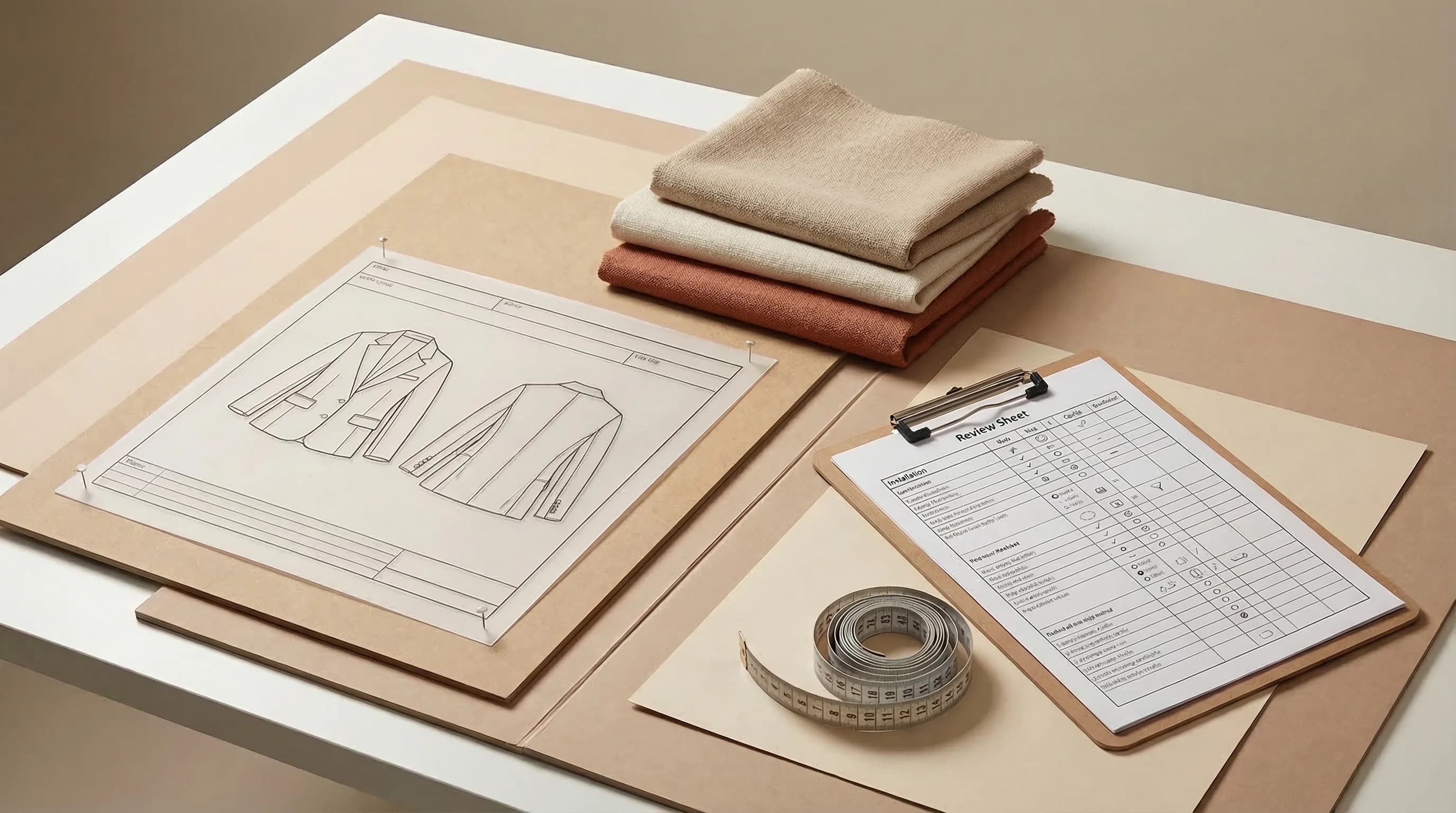
Visual direction helps frame the garment, but the handoff still needs specs, materials, and construction detail in one current pack.
What a tech pack actually does
A tech pack answers the factory's next operational question before the email gets sent. It tells the manufacturer what the garment is, how it should look, how it should be measured, what materials belong in it, and which details are still open.
A sketch or moodboard can start the conversation. A tech pack is what makes the conversation executable.
If the manufacturer still needs three different files and a Slack thread to understand the garment, the pack is not doing its job yet.
Editorial process
How the tech pack carries the workflow from concept to factory
What changes across the process
- 01
Step 01
Design concept
Sets what the pack needs to explain.
- 02
Step 02
References
Makes the direction reviewable.
- 03
Step 03
Draft
Brings specs into one working file.
- 04
Step 04
Review
Closes handoff gaps before export.
- 05
Step 05
Export
Creates the version the factory should follow.
- 06
Step 06
Sampling
Keeps clarification tied to the current pack.
The pack becomes more useful as the workflow moves from concept alignment into review, export, and factory clarification.
Editorial process showing where a tech pack sits between concept work and manufacturer execution
In practice
What changes when the pack stops living in five files
When measurements, BOM details, and version status live in one current workflow, the next revision starts from the latest decision instead of a factory scavenger hunt.
Create accountWhere a tech pack fits in the workflow
A tech pack sits between concept work and manufacturer execution. It usually starts once the team has a clear garment direction, then becomes more detailed before costing, sampling, and production handoff.
The exact level of detail changes by stage, but the job stays the same: reduce interpretation risk before the garment leaves your hands.
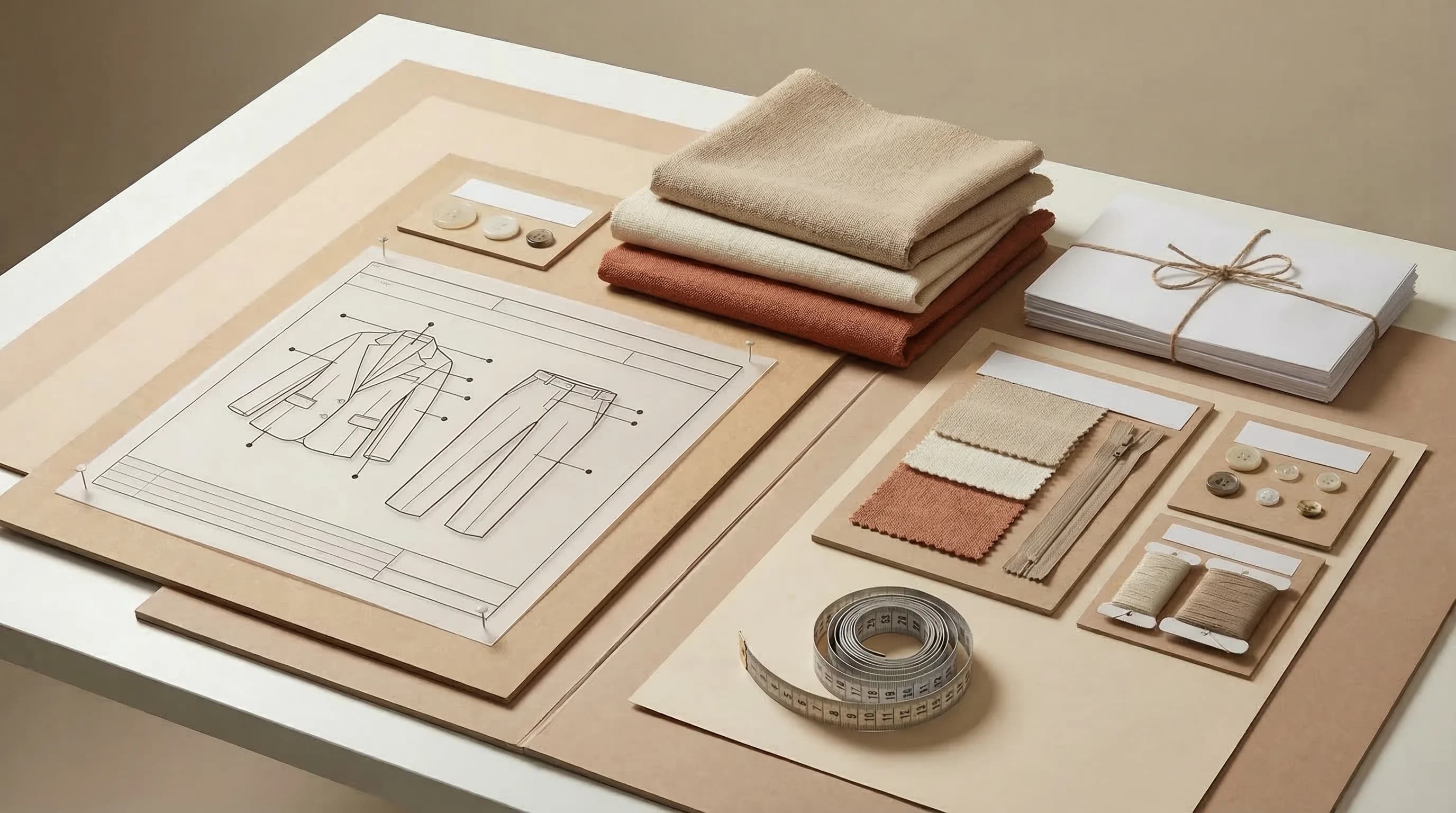
A manufacturer-ready pack works when visuals, specs, trims, and handoff materials stay organized as one current package.
Common mistake
What usually breaks the handoff
These are the ordinary gaps that turn a straightforward sample round into avoidable follow-up.
Sending only sketches and loose notes
A factory can react to silhouette, but it still has to guess the spec, BOM, and construction rules.
Letting files drift out of sync
When sketches, materials, and revision notes live in different places, nobody can prove which version is current.
Leaving materials or grading status implicit
If the team never says what is final, the manufacturer has to pause or improvise on the next sample.
What a complete tech pack usually includes
A usable tech pack usually includes the same core sections, even if the amount of detail grows over time.
| Section | What it answers | What breaks when it is missing |
|---|---|---|
| Garment overview and flats | What the product is and what silhouette is intended | The factory starts with the wrong visual frame |
| Measurements and grading status | How the garment should be measured and whether size logic is already defined | Fit reviews start with avoidable questions |
| Materials and BOM | What needs to be sourced and assembled | Substitutions or delays show up early |
| Construction notes | How details should actually be built | Sample rounds drift on seams, finishes, and trims |
| Packaging and handoff notes | What is final, what is pending, and what file is current | The team wastes time on version and status confusion |
If you want the send-ready checklist, use the related article on what should be included in a tech pack.
When a lighter pack is enough and when it is not
An early concept review or first costing conversation can use a lighter version of the pack. That does not mean the final handoff can stay light.
Before you ask a manufacturer to quote, sample, or prepare production details, the pack should clearly separate:
- what is final
- what is still being decided
- what the factory should follow exactly
Manufacturer requirements vary, but the goal is not to predict every factory preference in advance. The goal is to make intentional decisions explicit and mark the open ones honestly.
Where software helps
Manual documents can work, especially early on. The problem appears once the pack becomes a moving target across multiple files and revisions.
That is where tech pack software helps. A structured workflow makes it easier to keep measurements, BOM details, comments, and exports in one current system instead of rebuilding the handoff every time the garment changes.
If you want the practical checklist first, go to the manufacturer-ready checklist. If you already know the workflow pain, go directly to Alignes.
FAQ
Common questions, answered clearly.
Its purpose is to give the manufacturer one clear source of truth for how the garment should be sampled and produced.
Next step
Build a manufacturer-ready tech pack with less back-and-forth
Alignes helps small fashion teams turn garment references and notes into structured tech pack outputs, including measurements, BOM details, grading outputs, and a production-ready PDF.