
Key takeaways
What matters before you keep reading
01
Revision speed improves when comments are attached to explicit sections, not screenshots in chat.
02
One main guide keeps related articles aligned with the same workflow vocabulary.
03
Commercial CTAs work better after the article proves the operational change, not before.
Reader guide
Reader guide
A quick frame before the workflow details.
For
Technical design and operations teams reducing revision lag.
Read when
When reviews drag, exports drift, or approval status is unclear.
You'll get
Where AI helps, where ownership matters, and what a shorter loop needs.
On this page
Follow the article through the long read and keep your place.
On this page
4 sections
AI changes review cycles only when each revision is attached to structured fields, visible owners, and one current export package.
Editorial process
Shorten review cycles without losing the approval trail
What changes across the process
- 01
Step 01
A single draft pack enters review
The cycle starts with one current draft pack instead of parallel attachments moving through chat and email.
- 02
Step 02
Section-level review keeps feedback structured
Review comments stay attached to named sections so the next revision does not need to reconstruct context.
- 03
Step 03
Approval stays visible before export
The decision happens against the same record that will later produce the next export package.
At the approval checkpoint
NoSend the draft back for focused revision
Targeted revision stays tied to the same review thread and owner instead of restarting from screenshots.
YesPublish the updated export package
The approved version becomes the current export package without drifting away from source feedback.
AI matters when the draft, approval decision, and current export all stay attached to the same structured review record.
Editorial process showing draft review, approval checkpoint, and export outcomes in an AI-assisted review cycle
Where AI helps and where it does not
AI can speed up drafting, summarizing feedback, and turning repeated review comments into cleaner next versions. It does not fix a workflow where ownership, approval status, and current exports are still ambiguous.
The win is not "AI wrote something." The win is that the next revision starts from a structured review record instead of a pile of screenshots.
Common mistake
Common review breakdowns
These failure patterns are where review cycles quietly lose days, even when the team feels busy and responsive.
Feedback arrives without location
A comment screenshot without a named section creates follow-up work before anyone can revise the pack.
Ownership changes in mid-air
If the owner of the next revision is unclear, the review meeting ends without an actionable handoff.
Exports drift away from source data
A PDF marked approved is not useful if it is no longer connected to the latest source record.
In practice
AI helps most once the review loop is already structured
The real gain is not faster wording. It is faster review because comments, ownership, and export status stay attached to the same current workflow.
Create accountMake revision ownership visible
Review cycles get shorter when each question has an owner and each approval has a visible signal.
| Review question | Owner | Approval signal |
|---|---|---|
| Are the measurements ready for the next export? | Technical design | Base size and tolerance table approved |
| Are trims and labels final enough for the sample round? | Product development | BOM and branding notes confirmed |
| Is the current PDF the version everyone should use? | Workflow owner | Export version marked current and linked back to source |
When ownership stays visible, meetings end with a next action instead of a vague sense that "someone" will update the file.
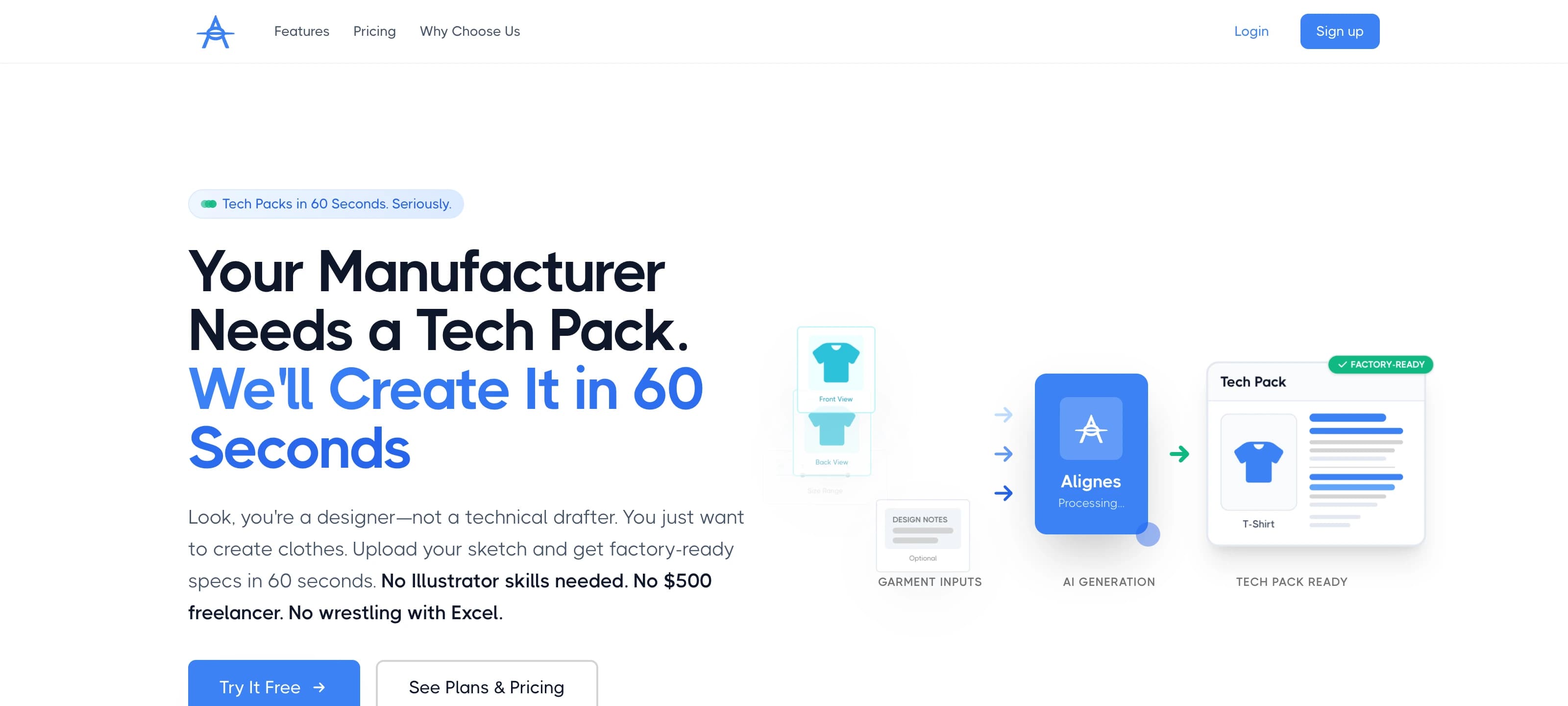
A shared workflow view helps the team keep source visuals, structured inputs, and export-ready output connected.
Keep the review packet tied to one current export
Every new export should be traceable back to the same structured record. Once export drift disappears, review meetings get shorter because the team is no longer debating which attachment is current.
The useful part of AI in review cycles is not the draft itself. It is the faster path from feedback to one current, reviewable package.
What a shorter review cycle actually looks like
A shorter cycle is usually less dramatic than people expect. The team still reviews, asks for changes, and approves. The difference is that each step points back to the same record, the same owner, and the same current export package.
If you want the broader workflow foundation first, go back to Tech Pack Automation Foundations. If you already need a shared workflow, go to Alignes.
FAQ
Common questions, answered clearly.
They break when approvals live in separate channels, exported files drift from source data, and no one can verify which version is current.
Next step
Turn review lag into a shared checklist
Structured requests, revision history, and export-ready outputs make the review cycle measurable instead of anecdotal.